Chapter 01
The advertisement
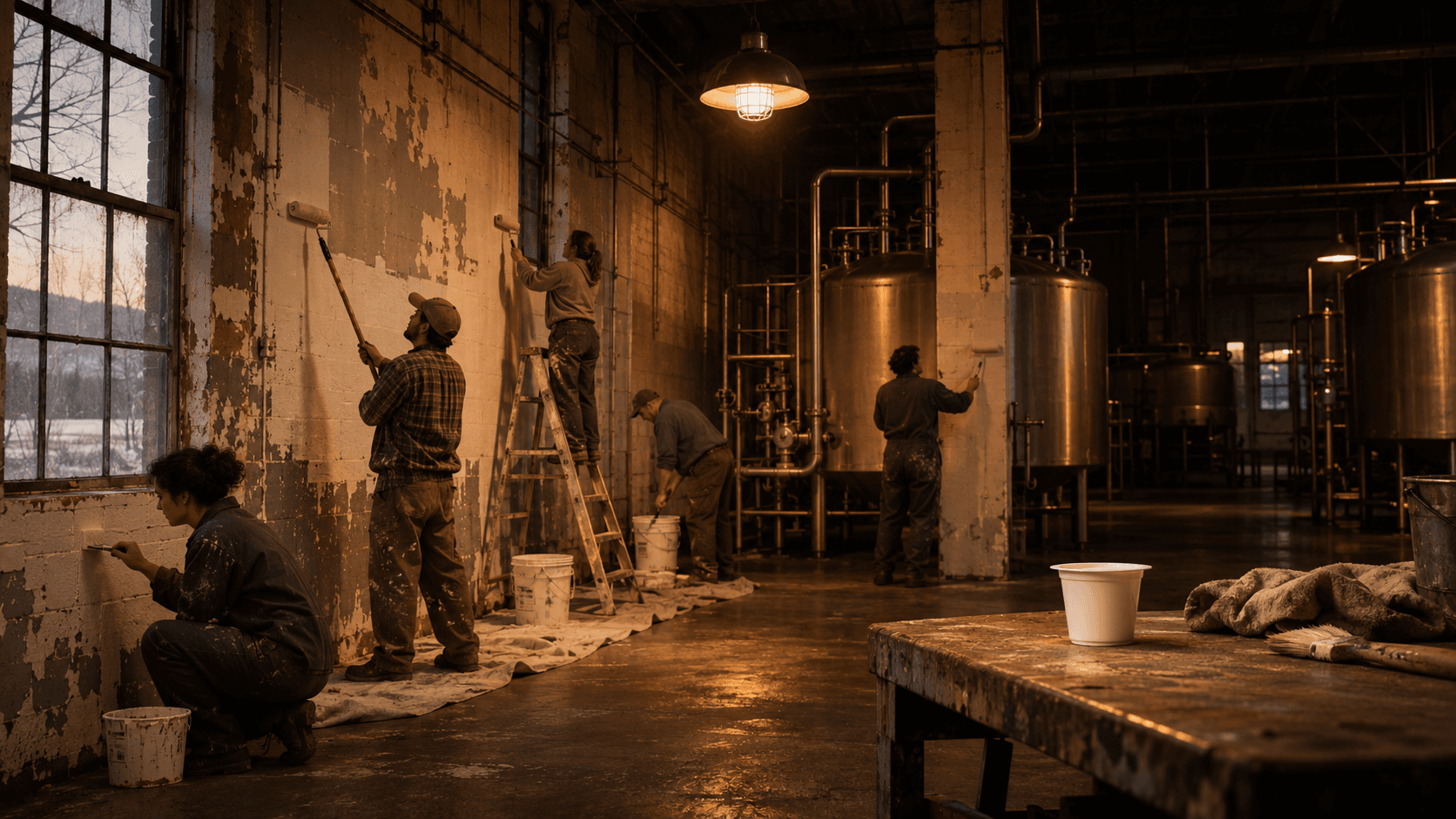
The factory reached Ulukaya as a piece of unwanted inventory. Its owner was closing it, and the rational advice was to stay away from an old industrial plant in a category he had not yet entered at scale. He visited anyway because the equipment and surrounding dairy region made a different kind of sense to someone raised around milk.
A distressed asset does not become an opportunity merely because a founder believes. The plant carried maintenance, sanitation, payroll, utility, and financing obligations from the day of purchase. Ulukaya's judgment was not that the risk disappeared; it was that the same physical constraints deterring others created a barrier if the product worked.
Chapter 02
Debt before demand
SBA-backed financing helped complete the purchase. The capital was smaller and more consequential than the venture rounds later associated with consumer companies: it attached repayment to machinery and a business that had not sold its defining product.
This is where the origin remains instructive. Ulukaya could not run a digital waitlist and abandon the experiment without consequence. The factory forced commitment before market certainty. That pressure narrowed attention toward formulation, production, and distribution—the work capable of making the obligation survivable.
Chapter 03
A town inside the bet
When a factory closes, the loss is distributed across families, suppliers, and a local economy. Reopening did not make Ulukaya a savior; it made the company dependent on knowledge and labor already present in the place.
Chobani's first chapter joined founder risk with community risk. The archive keeps both visible. The celebrated outcome should not erase the period when employees were working for an immigrant owner with limited money, no famous brand, and no assurance that the building would remain open.
Chapter 04
The debt began before the product
Buying the New Berlin plant committed Ulukaya to a building, aging equipment, utilities, maintenance, and a local payroll before Chobani had a finished recipe or a retailer. The factory therefore created a clock. Every month of development consumed money while every shortcut threatened the product on which repayment would depend.
That sequence changes the meaning of risk. The wager was not simply that Americans would eat thicker yogurt. It was that a small team could rehabilitate an industrial system, develop a repeatable product, satisfy food-safety requirements, and reach refrigerated shelves before fixed costs exhausted the company. The asset that made the opportunity possible also made delay expensive.
Chapter 05
A town was waiting for an answer
A closed factory leaves more than an empty building. It weakens suppliers, removes wages from nearby businesses, and tells experienced workers that the knowledge accumulated inside the plant no longer has a buyer. Reopening it made Chobani's private experiment visible to a community that had already absorbed one corporate decision.
This did not make the purchase charity. The plant had to become commercially productive. Its civic consequence came from aligning a viable product with machinery and labor that another owner had discarded. The case matters because it shows place, workforce, and company strategy occupying the same decision rather than appearing later as separate social programs.
Chapter 06
The alternative was not a blank page
Ulukaya was choosing between forms of constraint. A new facility might have offered cleaner equipment but required more capital, more time, and a site without an experienced dairy workforce. The closed plant offered problems he could inspect alongside capabilities already assembled in one place.
This is why distressed assets cannot be evaluated only by replacement cost. Their value may live in permits, utilities, supplier proximity, worker knowledge, and the time saved by adapting an imperfect system. The founder's advantage was recognizing a functioning industrial memory where others saw depreciation.
Chapter 07
What this decision does not prove
Chobani's outcome does not establish that ignoring advisers or buying failed factories is generally wise. Survivorship can turn one successful exception into dangerous advice. Many obsolete facilities remain obsolete, and conviction cannot repair economics that never become viable.
The transferable discipline is narrower: investigate the reason an asset has been abandoned, separate recoverable capability from structural failure, and understand the obligations that begin immediately after purchase. Courage becomes useful when paired with technical knowledge, financing realism, and a product thesis specific enough to be disproved.